
Focusing on constructive things to do for American science
Time to let go of the idea that the administrators are going to lead us out of this alone

The latest battle in the Trump administration’s conflict with American higher education has centered on a new “compact” offered by the Secretary of Education to initially nine universities and then to all universities a couple of days later. The compact would give preferential tax and grant benefits to institutions that agreed to follow certain rules about admissions, tuition, and free expression. Although the primary benefit is for laboratory research, most of the requirements would affect operating units or teaching in the humanities and social sciences.
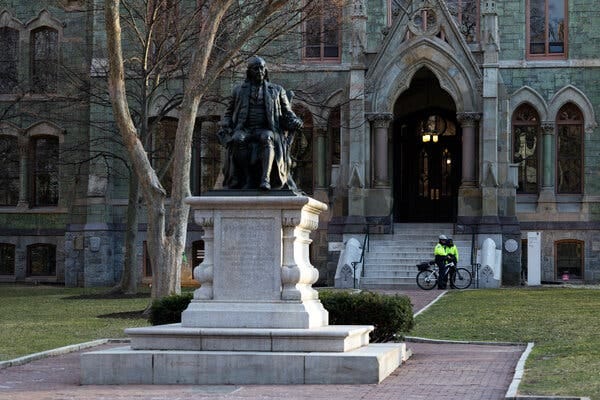
As I said this week in an editorial in Science, Trump’s initial list and the overall strategy are designed to divide - public from private, Ivies from others, scientists from the rest of the campus. MIT was the first to reject the compact, and after I posted my piece, they were joined by Brown, Penn, UVA, and USC. Kudos to MIT for starting the party. Others have not said anything yet. Texas and Iowa have expressed enthusiasm, and no doubt more will join both camps in the coming days. With each subsequent announcement of someone declining, I’m excited to see my pessimism invalidated, since my piece was titled “Higher education fails at collective action.”
The Wall Street Journal reported today that the remaining holdouts (including UVa before they made their announcement), plus Washington University in St. Louis, Arizona State, and the University of Kansas went to the White House to discuss all of this. There are probably some people on the campus who think they shouldn’t even go to the meeting, but I think on balance it was probably a good idea to see what’s up.
The administrators are not going to lead us out of this alone
Ever since the inauguration, there has been pressure on university presidents to “do something!”. Speak out more, stand up the administration, etc. There has been a lot of back and forth about this that has mostly not been good, because it has sowed division among institutions and among the presidents. If you’re a president, throwing shade on your peers is really tacky and not smart, and the same with your predecessors at the same institution. Not consistent with the Jedi code. All that division helps no one.
This apparently boiled over at a meeting of the AAU Presidents that was described in this Atlantic article with a very clickable headline:
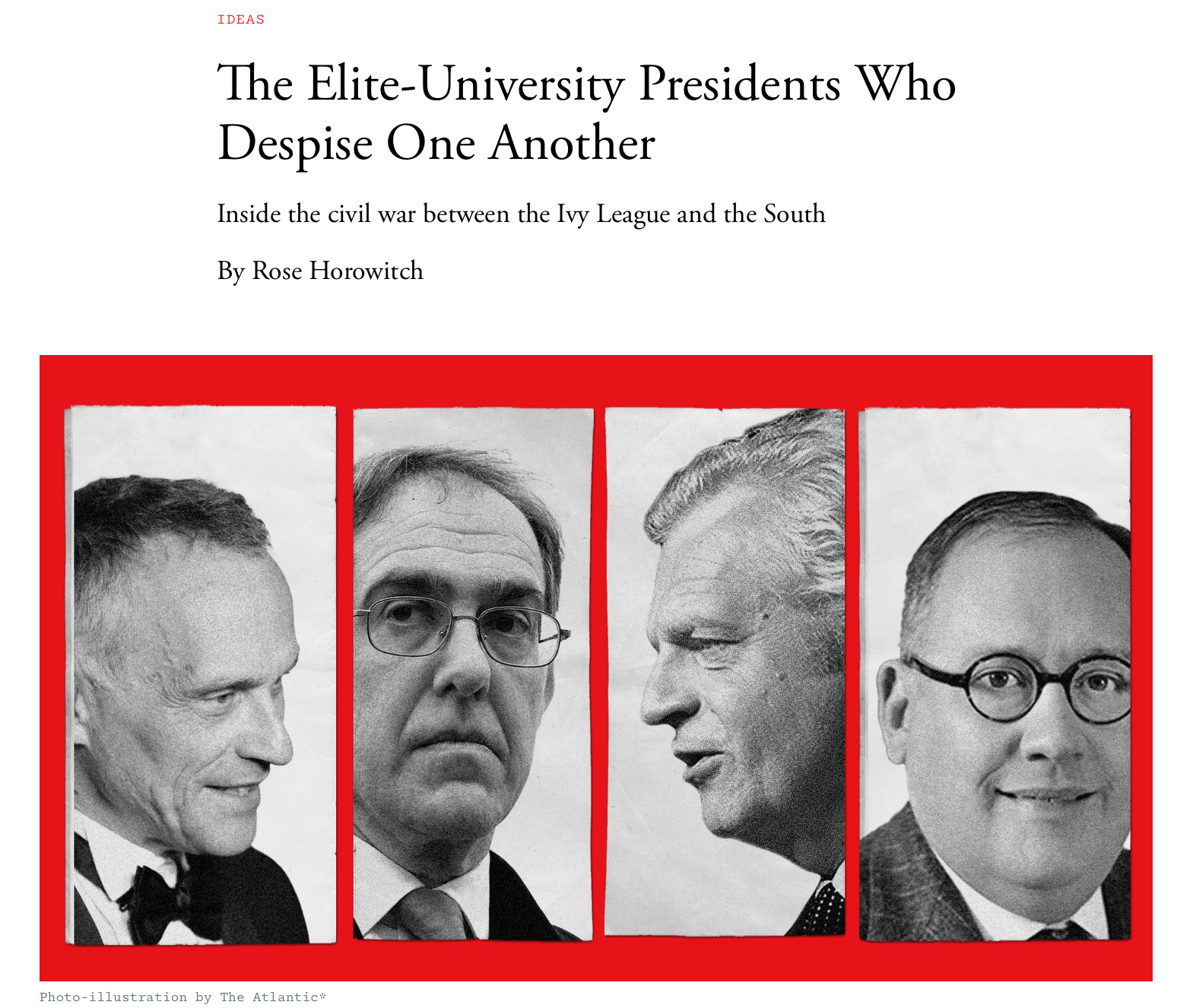
The presidents have since denounced the headline, but no one has attacked any of the factual elements of the article. AAU meetings are supposed to be confidential, so what is more interesting about this is that in addition to these four disagreeing, at least two others must have leaked and confirmed it to the Atlantic. Doesn’t look like a sector acting coherently.
And that’s partly because it’s not designed to act coherently. Ever since the 1980s when the financial stakes started going up, the Bayh-Dole act was passed, ESPN was founded, the endowments were securitized, and the US News started its diabolical ranking, colleges became much more competitive. So, it’s not really the job of a university president to save the entire sector. It’s their job to do what is best for their campus. The ones standing up to the administration and turning down the compact have decided it’s in their interest; for some it is too costly. In the end, they’re focused on making payroll, keeping everyone safe and promoting their university, not saving the United States from ruining itself.
So, maybe we should just let them do that, applaud them when we agree, and focus on what other groups can do.
OK, so what can we do?
This is the question I get the most on the road. And I’m seeing some encouraging signs. We ran an editorial from Gretchen Goldman and Erica Chenoweth calling for scientists to continue to provide advice and collect data in ways that had been done by the federal government but now need to move outside.
A couple of weeks after we ran their piece, I had the honor of giving the opening remarks at the Independent Census Scientific Advisory Committee, which was formed from members of the previous government committee that was disbanded. Even though they didn’t have government support, they found a way to meet anyway and keep going. I was - and am - extremely inspired by this. Here is the video of that meeting.
This is how the pros do it. Congratulations to my former colleague Barbara Entwisle and her colleagues.
Some great reflections from recent presidents
For more inspiration, I highly recommend this Q&A with Ana Mari Cauce, recently of the University of Washington, and Jonathan Holloway, recently of Rutgers.
Cauce made a great point about why different presidents might be constrained in speaking out:
“I want to point out that some of the presidents who’ve been most vocal don’t have medical schools. I don’t want to be judging other folks, because I don’t know what they have on the line. Those of us who have hospitals — we’re talking about life and death. If I felt that by saying something it would make a difference, I would certainly consider saying something. But there are other ways of talking. We were involved in dozens of lawsuits. That is communication that, quite frankly, made a lot of impact. So I feel like we communicated very clearly what we would and wouldn’t do.”
And about how the drive for rankings and other rewards are driving the current behavior:
“I’m a psychologist. I think we’re all big rats and we push the levers to get the pellets. And the pellets have been in not-great places. If you look at what presidents tend to get bonuses for, it’s often things like rising in the rankings or how much money they raise — which, by the way, I would not take bonuses for either one of those things. We’ve done quite well in both, but I talked with my board and said, This is not something I’m chasing.”
If only everyone was saying this to their boards! I can say from experience that isn’t the case; I’ve uncomfortably sat through too many meetings about the US News formula and how important it would be to move up even one slot.
And here’s another gem on research communication from Ana Mari:
“How do we change our reward systems? I want our faculty to write editorials for The New York Times or to appear on Fox News. Yet we often don’t reward people for that. I want to be clear — if a faculty member is incapable of communicating, but they are going to find cures in their lab, I don’t want to force them out. But for faculty who want to do this, and a lot of our faculty do, how do we support them? The truth is that most of us do amazing things in our communities. We’ve been very involved, for instance, in cleaning up Puget Sound. But that’s not what we talk about.”
Bottom up always wins
When higher education contributed to the civil rights movement and the end of the Vietnam War, it wasn’t because of institutional leadership. If anything, it was in spite of it. When Title IX led to better protections for sexual assault victims, it wasn’t because of administrations (I ought to know having been the recipient of one of the more famous complaints). It’s always been the faculty, staff, and students who have led us out of these things.
I believe this one will succeed because of people in universities who just keep doing the work despite all of the attacks - like the folks at the Independent Census Advisory Committee continuing to collect and curate data for the world.
And the folks I meet all over the country creating knowledge and teaching students with as much energy as ever.
And the administrators keeping the lights on.
Let’s keep it going.